Aerospace & Aviation

Complex procedures, walked through in true-to-scale 3D

Aerospace maintenance and assembly demand precision under pressure. VR simulation lets engineers and ramp crews rehearse intricate MRO procedures, ground-handling, and emergency response on a perfect digital twin — protecting both people and multi-million-dollar assets.
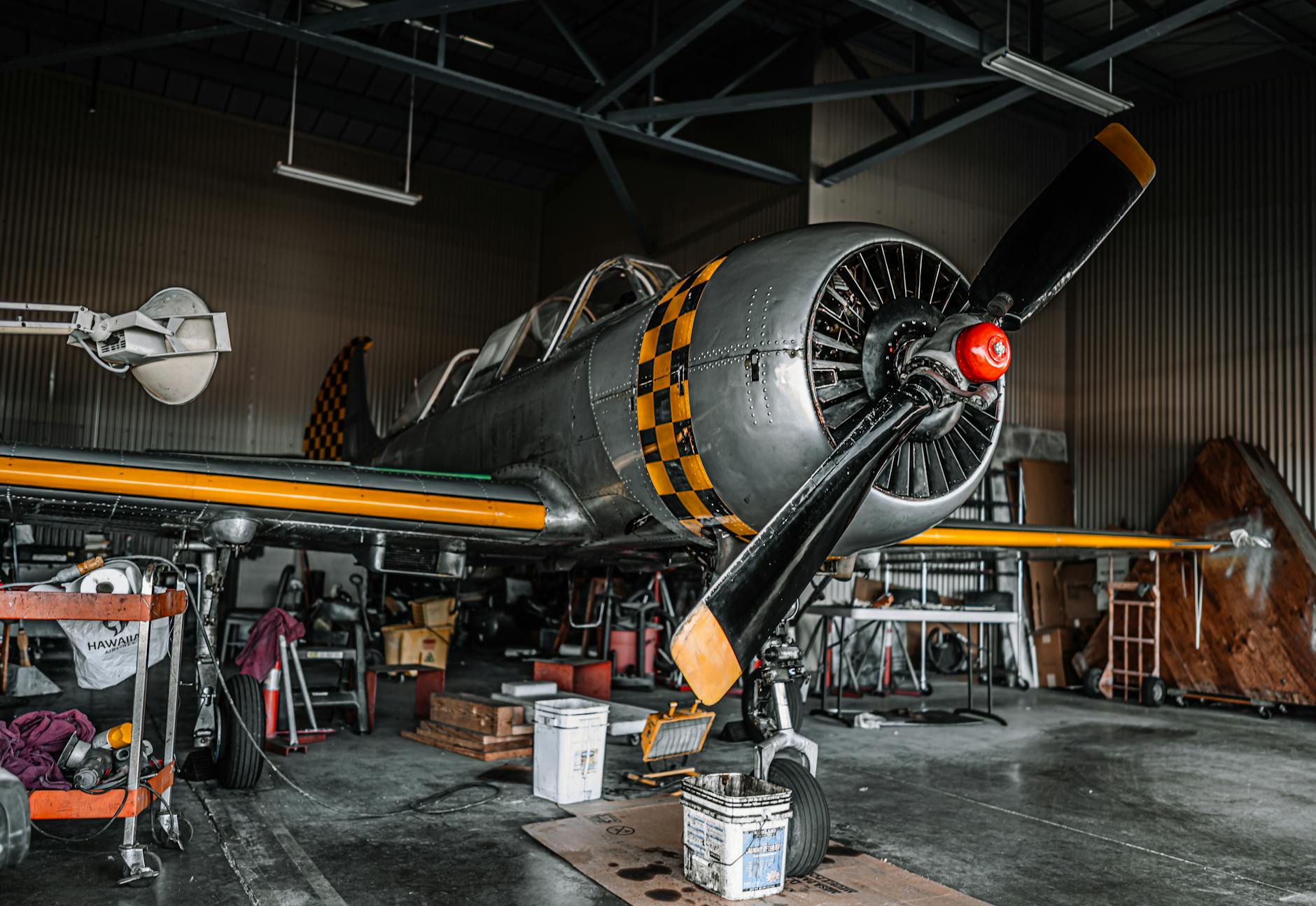
Aviation engineer performing aircraft maintenance

1:1

Digital twin of real equipment

↓ cost

No aircraft downtime for training

First-time-right on the hangar floor

Hazards we simulate

  • Ramp & ground handling
  • Complex MRO sequences
  • Hazardous materials
  • Confined inspection spaces

Why teams choose simulation

Train on the real airframe — virtually

Engineers learn exact part locations and sequences without grounding an aircraft.

Reduce costly errors

Rehearsing intricate procedures cuts the rework and incidents that drive AOG cost.

Onboard faster

New technicians reach competency in a fraction of the time of shadowing alone.
Related project work

Aerospace in practice

The Grid - Switches and Routes
Mixed RealityXR

The Grid - Switches and Routes

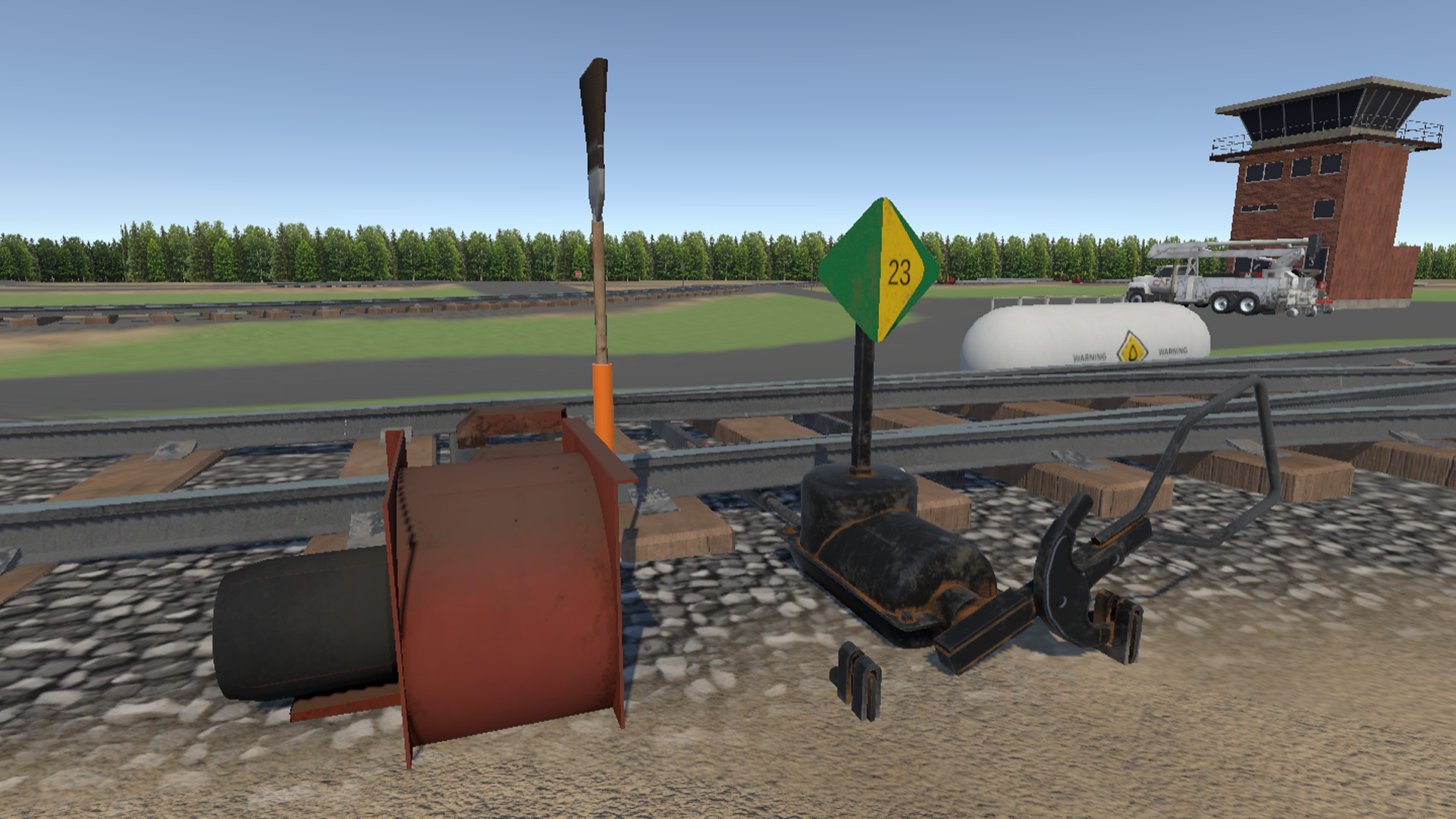
The Switches and Routes module provides a high-fidelity simulation designed to master the logistical and safety-critical tasks of rail yard operations. By interacting with detailed "digital twins" of major North American hubs—including the FIT, Symington, MacMillan, and Markham yards—users step into the role of a ground operator tasked with navigating complex track geometries. The primary objective is to move locomotives and rolling stock efficiently by manually aligning a series of switches to create a clear, continuous path. This hands-on approach transforms theoretical routing logic into a practical skill set, ensuring students can visualize and execute movements through dense, high-traffic environments without error. Safety and procedural discipline are at the heart of the experience. The simulation strictly enforces Point and Call procedures, requiring users to physically and verbally confirm the position of every switch before and after it is thrown. To maintain realism, the module introduces environmental variables, such as track debris, which users must clear using a broom to ensure a proper switch point fit. This level of granular detail reinforces the habit of "looking twice" and emphasizes that operational efficiency never comes at the cost of safety protocols. Beyond simple routing, the module offers an advanced curriculum focused on Track Protection. Students learn to secure specific sections of the yard for maintenance or safety zones by strategically deploying flags, derails, and switch locks. By mastering these defensive measures, users gain a comprehensive understanding of how to isolate tracks and protect ground crews from unexpected movements. This dual focus on both active transit and stationary protection ensures that employees are prepared for the full spectrum of responsibilities encountered in a live rail yard.